
Toilet repair and installation · Bountiful, UT
Toilet Running, Clogged or Rocking? Toilet Repair and Installation in Bountiful, Explained
Most toilet problems come from a handful of parts, and many have a clear sign. This page matches the symptom to the part, then covers clogs, leaks, replacement and moving a toilet. Anyone planning toilet installation, Bountiful UT homeowners included, should measure the rough-in distance from the wall to the drain before choosing a model.
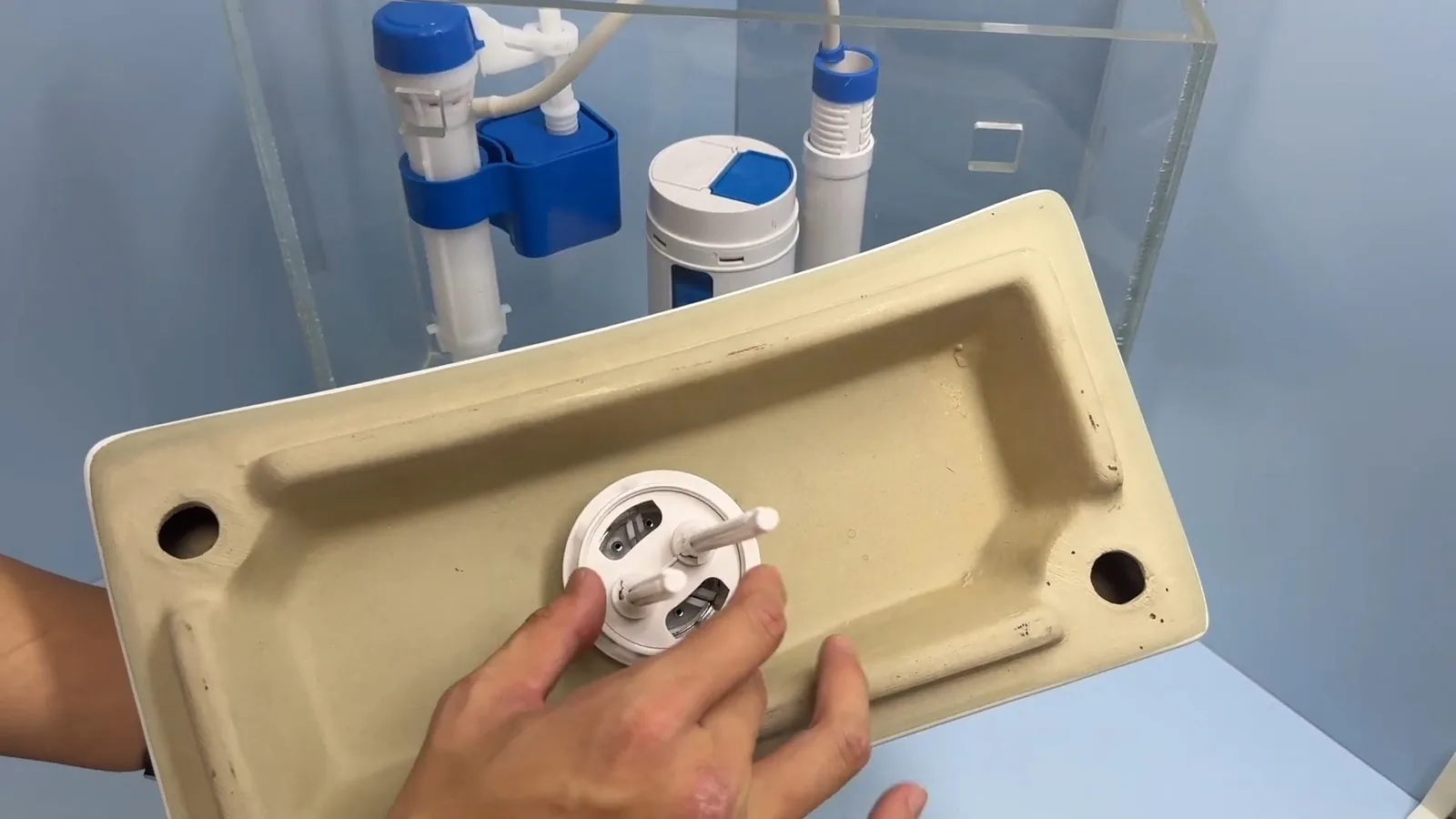
Running, hissing or weak flush: the usual cause of each
Take the lid off the tank and look. Most of what goes wrong is inside it.
| Symptom | Usual cause | What is done |
|---|---|---|
| Runs on, or refills every few minutes | A flapper that does not seal | Replace the flapper, check the chain |
| Hissing, tank never stops filling | A worn fill valve or a float set too high | Adjust or replace the fill valve |
| Weak flush | Clogged rim jets, low water in the tank or a partial clog | Clean the jets, set the water level, clear the line |
| Water around the base | A failed wax ring, a loose bolt or a leaking supply | Reseat the toilet with a new wax ring |
| Rocks when you sit | Loose floor bolts or an uneven floor | Tighten and shim; a rotted floor needs repair |
| Cracked bowl or tank | Damage | Replace the toilet or tank |
The running toilet, which wastes the most water
A toilet that runs silently can waste a lot of water, and the only sign is a bill. A simple test finds it.
- Remove the tank lid and add a few drops of food coloring to the tank.
- Wait 15 minutes without flushing.
- If color appears in the bowl, the flapper is leaking.
If the toilet is fine, the leak is elsewhere. The page on tracing an unexplained water bill covers the meter test. Flapper and fill valve parts are inexpensive, and many are replaced in a short visit.
A clogged toilet
Start with a flange plunger, which seals the drain opening better than a flat cup. Push slowly, then pull to break the plug. A closet auger reaches farther into the bend.
Call for help if:
- The toilet clogs repeatedly, even after plunging.
- More than one fixture is draining slowly or backing up, which points to the line. See a sewer line problem.
- An object has gone down the toilet, such as a toy or a brush.
- Water rises toward the rim and does not drop after a flush.
Do not use a chemical cleaner in a toilet. It sits in the bowl and makes later work riskier.
Leaks at the base and the wax ring
A toilet sits on a wax ring that seals the drain opening in the floor. When the seal fails, water appears around the base, often only after a flush.
Do not ignore it. Water in the floor can rot the subfloor and stain the ceiling below. The fix is to pull the toilet, replace the ring and set it back, and check the flange and the floor first.
- A stain or soft spot on the floor near the toilet.
- A toilet that rocks, which loosens the seal.
- A smell of sewer gas near the base.
If water has soaked the floor, see drying a soaked floor.
Repair the toilet or replace it
An older toilet is not always worth repairing. These questions help decide.
| Situation | Usually points to |
|---|---|
| Worn flapper or fill valve | Repair |
| Cracked bowl or tank | Replace |
| Constant clogging with a good drain line | Consider replacing with a different design |
| An older, high-flush-volume toilet | Replacement may save water |
| A toilet that is fine but hard to clean or too low | Replacement for comfort |
Look for the WaterSense label when you choose a new toilet. It is an EPA program that labels toilets that use 1.28 gallons per flush or less and meet performance tests.
What toilet installation involves
A replacement is a short job when the floor and flange are sound.
- Shut off the supply, empty the tank and bowl and disconnect the supply line.
- Remove the old toilet and clean the flange.
- Check the flange for cracks and the floor for soft spots.
- Set a new wax ring or seal, place the new toilet and tighten the bolts evenly.
- Connect the supply, test for leaks and caulk the base if you want it.
Measure the rough-in before you buy. It is the distance from the wall to the center of the drain, and the common size is 12 inches, though some homes differ.
Moving a toilet or adding one
Relocating a toilet is a bigger job than replacing one, because the drain, the vent and the water supply move with it. The drain needs a slope and a vent, and the floor may need to be opened.
Ask whether the work needs a permit. The Bountiful Building Department at 801-298-6125 can answer for a given job. If a bathroom is being added, the water and drain lines need to reach it, and the plumber should explain what is involved before quoting.
The supply line and shutoff valve
Two small parts under the toilet cause a surprising number of calls. The shutoff valve, often called the angle stop, lets you turn off water to one fixture. The supply line carries water from the valve to the tank.
A valve that will not turn, drips from the stem or weeps at the connection is worth replacing before it fails. A braided supply line is common and can burst when old, so a worn line is a small swap that can prevent a flood.
- Turn the valve once or twice a year so it does not seize.
- Look for corrosion, a green crust or drips at the connections.
- Replace a supply line when you replace the toilet, since it is already apart.
- Know where the shutoff is, so you can stop a running or leaking toilet quickly.
Bowl shape, seat height and flush design when choosing a toilet
A toilet is used daily, so the choices affect comfort as much as cost. Bowl shape, seat height and flush design each change how the toilet works.
A taller seat suits many adults, and a compact bowl saves space in a small bathroom. Some designs are easier to clean, with a smooth back and a concealed trapway. Dual-flush models offer a small and a large flush, and a single-flush model is simpler. Ask the plumber about the reliability and parts for any model you pick, since an unusual design can be hard to repair.
- Check the rough-in and the space around the toilet before you shop.
- Compare the flush design and the sound it makes.
- Ask how easy it is to find parts for the model.
- Consider the seat height for everyone who uses the bathroom.
Questions to ask about a toilet job
These questions make a quote clear.
- Is this a repair or a replacement, and what is the failing part.
- Does the quote include the new toilet, a wax ring, supply line and shutoff valve.
- What happens if the flange or floor is damaged.
- Who disposes of the old toilet.
License details are available on request before work begins. Ranges are on the toilet cost ranges, and the plumber confirms the price after seeing the problem.
Tell the plumber what the toilet does and how old it is.
Call (833) 840-2034Ready to fix or replace the toilet?
Call (833) 840-2034 and say what the toilet is doing, how old it is and whether water is on the floor. A plumber will explain the likely cause.