
Tankless water heaters · Bountiful, UT
Thinking About Going Tankless? What to Check First for a Bountiful Home
A tankless heater promises hot water that does not run out, and it also brings a bigger gas line, a different vent and a maintenance schedule that a tank never needed. Most of the cost and most of the surprises are in those details. This page covers what to check in your house first, so the decision is made before the quote arrives. A Bountiful Utah tankless water heater depends on a gas line, vent and meter that can carry the load, which is why those checks come before the quote.
Is a tankless heater worth it for your house?
A tankless unit heats water as it flows instead of storing it. That removes the standby heat loss of a tank and the limit of a tank's capacity, but the unit has to heat a large flow of cold water at once, and that demand shapes everything else.
It tends to make sense when a tank has failed and you plan to stay in the house for years, when the household has run out of hot water in the middle of showers, or when a tank has no good place to sit. It makes less sense for a household with low hot-water use, or one where the gas line and vent would need major work to suit the unit.
- Count the fixtures that run hot water at the same time on a busy morning.
- Note the fuel you have now, and whether you would be changing it.
- Ask how many years you expect to stay, because the savings come slowly.
If your tank is simply worn out and you want the least disruptive swap, the page on replacing a tank heater covers that route.
Whole-house or undersink: pick by where the hot water is used
Tankless is not one product. A whole-house unit serves every fixture from one location. A point-of-use or undersink unit is a small heater placed at a single sink or bathroom, so hot water arrives quickly where the main heater is far away.
| Unit | Best fit | Watch for |
|---|---|---|
| Whole-house gas | Houses that need hot water at several fixtures at once | Gas line size, venting and cold-weather flow |
| Whole-house electric | Homes without a suitable gas supply | Very high electrical demand, which can mean a panel upgrade |
| Point-of-use or undersink | A remote bathroom or kitchen sink with a long wait for hot water | A single outlet only, with limited flow |
A small unit at a distant sink often solves the real complaint, which is waiting for hot water, without touching the main heater. Mention that complaint when you call.
The gas line and vent are usually the real project
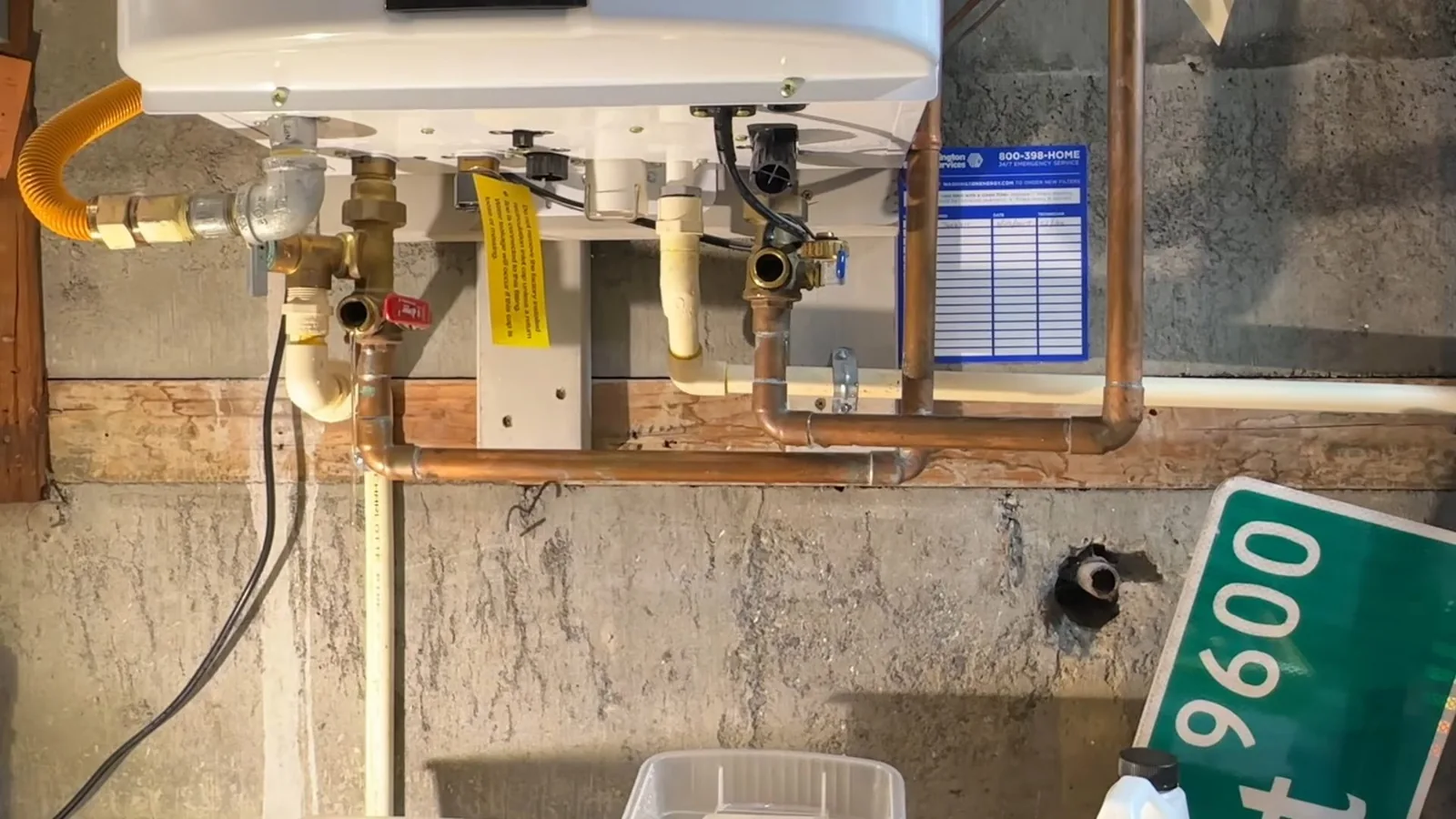
A whole-house gas unit burns a lot of fuel in a short time, so it usually needs a larger gas line than a tank of the same era did. It also vents differently, often through the wall or roof in a sealed pipe, and that route has to be found, cut and finished.
Ask the plumber to look at three things before pricing: the size and length of the existing gas line, the route and distance to an outside wall or roof for the vent, and the gas meter capacity. The gas supply and meter belong to your gas utility, so if the meter needs to change, that conversation is theirs to have. If you ever smell gas, leave the house first and call the utility or 911; the page on gas line work explains what the plumber does afterward.
Flow rate and cold winter water: what the spec sheet means
A tankless unit is rated by how many gallons per minute it can heat to a set temperature. That number falls as the incoming water gets colder, and Bountiful winters, with freezing nights and snow, mean the water entering your house is coldest exactly when you want a hot shower.
Ask the plumber to size the unit using the winter inlet temperature, not the summer one, and to add up the flow of the fixtures you run together. Two showers and a dishwasher at once may need more than one unit, or a larger one, than a single shower does.
Describe your fixtures and have a plumber size the unit.
Call (833) 840-2034Scale in Bountiful's water and the descaling schedule
Bountiful's 2025 water quality report describes the supply as relatively hard, especially the well water that makes up about 60 percent of it. Scale forms where water is heated, and a tankless unit has narrow passages that scale can restrict.
That is why descaling is part of owning one here. Ask the plumber how often the manufacturer recommends it and whether the unit has isolation valves that make flushing easy. Ask too whether a softener belongs in the plan; the page on softening the water first explains how to test your water before you decide.
Power outages, freezing and where the unit goes
Most gas tankless units use electricity for ignition, controls and the fan, so they stop in a power outage unless backup power is supplied. A tank heater with a standing pilot may keep working. Ask about this if outages are a concern.
Placement matters in a cold climate. A unit in an unheated garage or on an exterior wall needs freeze protection, and condensation drains need a path that will not freeze. Follow the manufacturer's guidance, and ask the plumber where the unit will sit and what protects it in a hard freeze. The page on frozen and burst pipe repair covers what a freeze can do to the pipes around it.
Maintenance and repair you should expect
Plan on a yearly check: flushing the heat exchanger, cleaning inlet screens and testing the vent and ignition. Owners who skip it often meet the same problem sooner, which is error codes caused by scale or a restricted flow.
If an existing tankless unit has stopped working, bring the error code and the model to the call. Many codes point to a specific cause, such as a flow sensor, a blocked vent or an ignition fault, and that shortens the visit. Repairs on these units depend on parts availability, so ask whether the part is on hand.
What to have ready before the first tankless conversation
Have the following ready, and the first conversation will be more useful: the make and age of your current heater, the fuel type, the location of the gas meter and the room it would go in, how many bathrooms and big hot-water appliances you have, and whether you have run out of hot water before.
Ask for the quote to list the unit, the gas line, vent, electrical, condensate and removal items separately. Typical ranges are on the tankless installation cost ranges, and the plumber confirms the price after seeing the house. Ask too whether a permit applies; the Bountiful Building Department, at 801-298-6125, can answer that for your job.
Want to know if tankless fits your house?
Call (833) 840-2034 and describe your current heater, your fuel and how the household uses hot water. A plumber will tell you what to check next.