
Basement waterproofing · Bountiful, UT
Damp Walls or Water on the Floor? Basement Waterproofing in Bountiful
Water in a basement comes from only a few places. Once you know which one it is, the fix usually follows. This page covers how to read the clues and what the interior and exterior options involve. Pricing basement waterproofing & perimeter drains, Bountiful UT contractors will first ask where the water enters.
Where the water comes from
Before anyone talks about drains or membranes, work out the source. A plumbing leak and groundwater call for different fixes.
| What you see | Likely source | Where to read more |
|---|---|---|
| Water at the base of the walls after rain or snowmelt | Groundwater or surface water pressing on the foundation | This page |
| A wet spot that appears with no rain | A leaking pipe or a drain line | testing for a pipe leak |
| Water near the water heater | The tank or a fitting | a leaking tank |
| Water coming up from a floor drain | A blocked drain or a sewer line problem | clearing a blocked drain or sewer line repair |
| White powder on concrete or block walls | Moisture moving through the wall | This page |
When and where water appears points to the cause
Notice when and where the water appears. That pattern is the best evidence of the cause.
- After a storm or snowmelt only: points to surface or groundwater.
- All year: points to a plumbing leak, a high water table or a source that does not depend on weather.
- At the same corner each time: check the gutter downspout and the grade outside that corner.
- At the floor and wall joint: water entering at the joint where the slab meets the wall.
- Through the middle of the wall: a crack, a pipe or a window well.
Photograph the wall, note the date and the weather. A plumber or waterproofing contractor will ask.
Start outside: gutters, grade and window wells
Most water problems are solved, or at least reduced, outdoors. These steps cost little compared with the others.
- Extend downspouts several feet away from the foundation.
- Keep gutters clear so they do not overflow against the wall.
- Check that the ground slopes away from the house, not toward it.
- Keep window wells clear and covered, with working drainage at the bottom.
- Check that irrigation heads and beds are not soaking the soil beside the foundation.
These are not a replacement for a drain system when water is entering from below, but they reduce how much the system has to handle.
Interior perimeter drains and sump basins
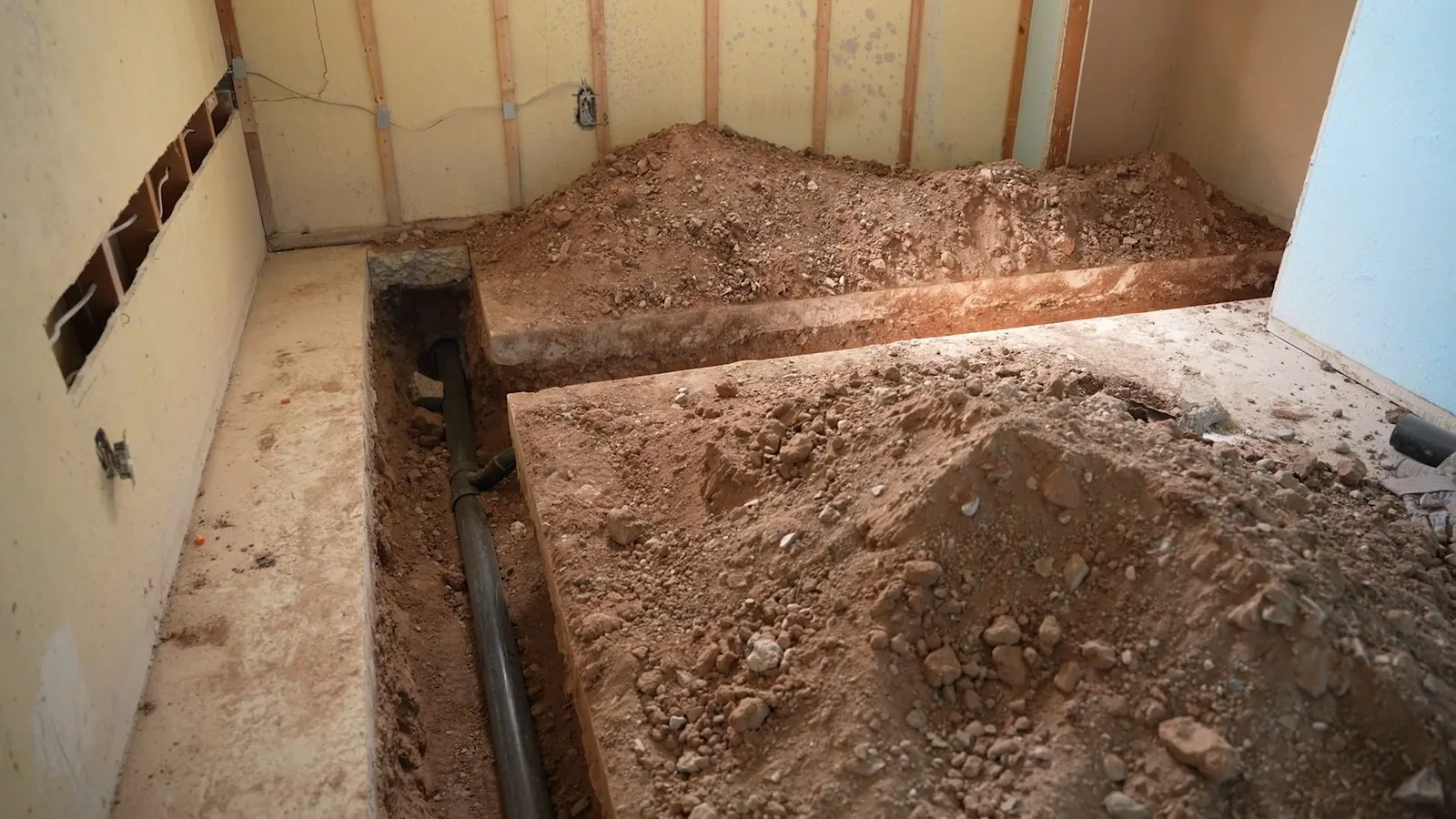
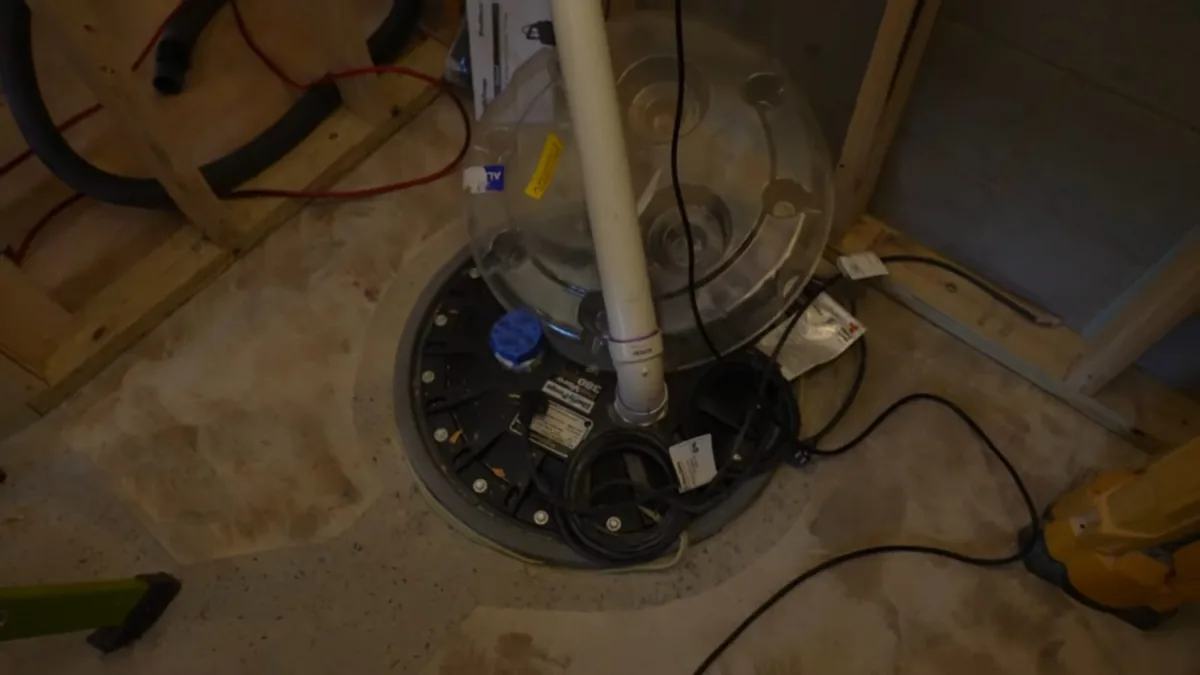
An interior system collects water at the footing and routes it to a sump basin, where a pump sends it out. The work is done inside the basement.
- A channel is cut along the edge of the floor where the slab meets the wall.
- Perforated drain pipe is laid in the channel, usually with gravel around it.
- The pipe slopes to a sump basin set below the slab.
- A pump in the basin discharges water through a pipe to the outside, away from the house.
- The concrete is patched over the channel.
The system collects water that has already come in and manages it. It does not stop water from reaching the wall. Ask where the discharge goes, since a pump that sends water to the base of the wall defeats the purpose.
Exterior waterproofing and drains
An exterior system works against the foundation from outside. The soil is excavated down to the footing, the wall is sealed and a drain pipe is laid at the base.
It is a bigger job, with digging, restoration of landscaping and often the removal of decks, steps or plants. It is more likely when the wall is cracked or failing, or when an interior system is not enough. Because it involves digging, Blue Stakes 811 applies, and private lines such as sprinklers and water service lines are typically not marked by utilities.
| Interior drain and sump | Exterior waterproofing | |
|---|---|---|
| Where the work happens | Inside, at the floor edge | Outside, along the foundation |
| Disruption | Basement floor edge and finishes | Yard, plants, steps, decks |
| What it does | Collects and pumps water that reaches the footing | Keeps water from reaching the wall |
| Best when | Water enters at the floor-wall joint | The wall itself is cracked or failing |
Cracks, walls and moisture barriers
A crack in a poured concrete wall can be sealed from the inside, with an injected resin or a patch. That addresses a specific entry point and does not replace a drain if the water pressure is high.
Interior wall membranes and vapor barriers guide moisture to the drain and keep it off finishes. They manage moisture but do not stop it. A wall that is damp with white powder on it is a sign of moisture moving through, and the water damage restoration page covers drying if the water has already soaked finishes.
What is and is not a plumbing job
Waterproofing sits between plumbing and construction. Plumbing leaks, drains and sump discharge are plumbing. Exterior excavation and foundation sealing can involve other trades.
Ask who will do each part and who is responsible for permits. The Bountiful Building Department at 801-298-6125 can confirm which approvals apply to a given job. A sump pump discharge line should not feed into the sewer. The South Davis Sewer District at (801) 295-3469 can confirm local rules.
Records to keep after a basement water event
Water in a basement can raise questions later, from an insurance claim to a home sale. Photograph the water, the stained walls and any damaged belongings before cleanup, and note the date and weather.
Keep the receipts and the plumber's written findings, including whether the source was a pipe or drainage. That distinction matters to an insurer and to a future buyer, and a clear record keeps it from becoming a guess.
Questions to settle before a waterproofing contract
Waterproofing quotes vary a lot. These questions make them comparable.
- What is the source of the water, and how was it determined.
- Interior, exterior or both, and why.
- Where does the discharge go, and how far from the house.
- What happens in a power outage.
- What is covered in the warranty, and does it transfer if the house is sold.
- How is the floor or the yard restored.
License details are available on request before work begins. Ranges are on the basement waterproofing cost ranges, and the plumber confirms a price after seeing the basement.
Describe where and when the water appears.
Call (833) 840-2034Ready to find where the basement water comes from?
Call (833) 840-2034 and describe where the water shows up, when it appears and whether it follows rain. A plumber will explain what to check first.