
Garbage disposal repair · Bountiful, UT
Disposal Humming, Jammed or Leaking? Garbage Disposal Repair in Bountiful, Explained
A disposal that hums, stops or leaks is usually jammed, tripped or worn at a seal. This page covers what you can safely check, the common repairs and when a new unit makes more sense. Garbage disposal repair & installation, Bountiful UT jobs included, usually begin with a reset and a check for a jam before anyone talks about replacement.
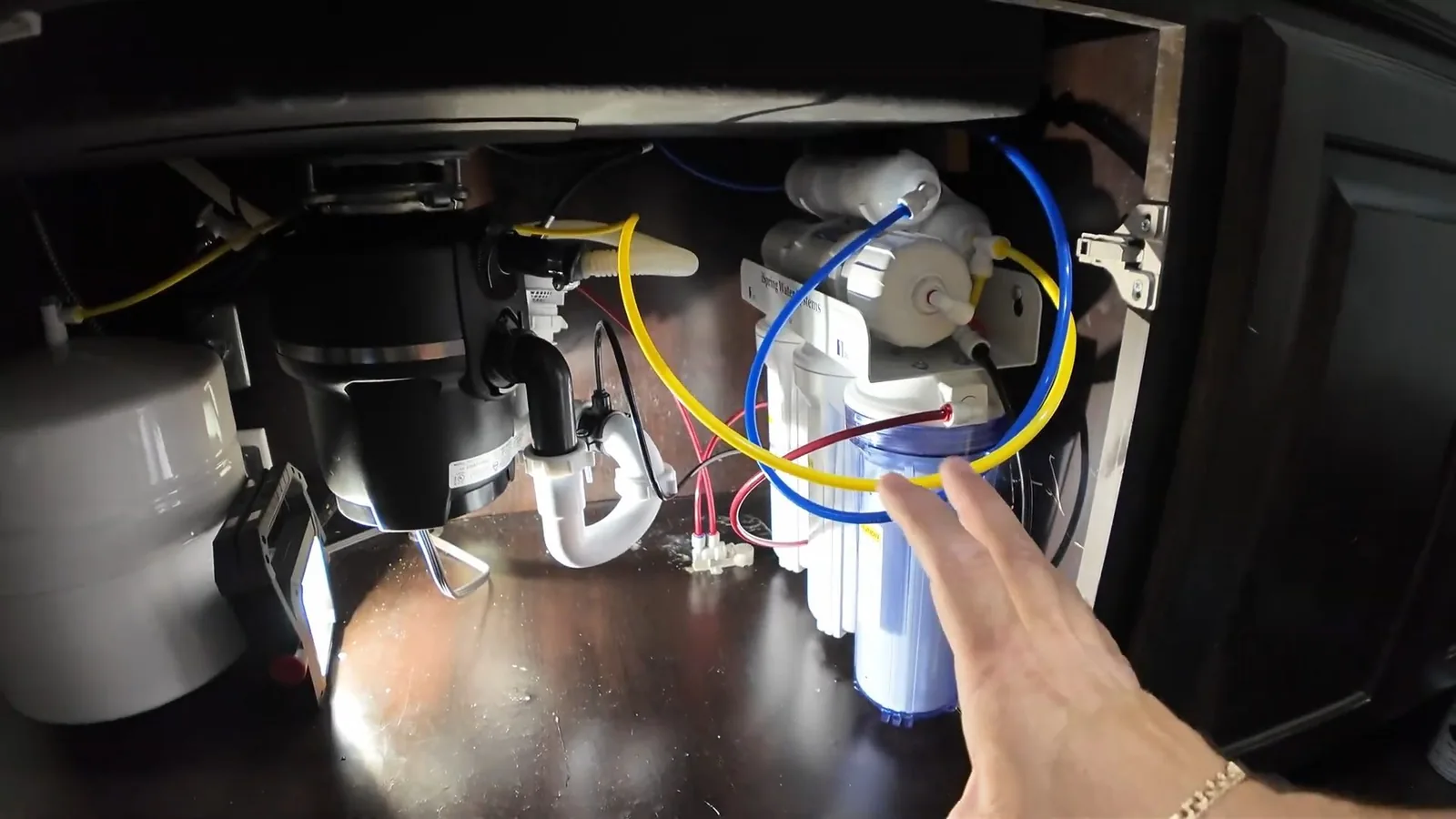
Safety first: never reach in
A disposal is a motor with a spinning plate. Treat it as dangerous even when it seems off.
- Turn off the switch, then unplug the unit or switch off its breaker before you check anything.
- Never put a hand or finger into the disposal. Use tongs or pliers to remove an object.
- Never use a chemical drain cleaner in a disposal or the sink above it.
If you cannot cut the power, call. A jam is not worth an injury.
Humming, silent or slow: what it usually means
The sound tells you a lot.
| Symptom | Usual cause | What to try or expect |
|---|---|---|
| Hums but does not spin | A jam, such as a bone, a fruit pit or a utensil | Loosen the plate with the hex key under the unit, then reset |
| Completely silent | A tripped reset button or breaker, or a failed switch or motor | Check the red reset button on the base and the breaker |
| Spins but grinds poorly | Dull or damaged grinding parts | Repair is limited, often replace |
| Loud rattling | A foreign object or a loose part | Switch off and look with a light, using tongs |
| Drains slowly | A clog in the drain line past the disposal | Clear the drain, see clearing a slow kitchen drain |
Freeing a jammed disposal with a hex key
Many jams clear in a few minutes with a hex key and a little patience.
- Turn the power off at the switch and unplug the unit or flip its breaker.
- Find the hex socket in the center of the underside of the disposal and insert the key.
- Work the key back and forth until the plate turns freely.
- Remove any object with tongs, not your fingers.
- Press the red reset button on the bottom, restore power and run cold water as you test it.
If the unit hums again, trips right away or the plate will not turn, stop and call. The motor or the grinding parts may be failing.
Leaks: where the water is coming from
A leak under the sink is not always the disposal. Find where the water appears before you assume.
- At the top, around the sink flange: a loose or worn sink flange seal.
- From the side, near the dishwasher hose: a loose hose clamp or a worn connection.
- At the drain pipe connection: a loose or cracked gasket.
- From the body or the bottom: an internal seal has failed, and replacement is usual.
A leak from the body is not worth patching. Check for water damage below, and if the cabinet floor is soaked, see drying a wet cabinet or floor.
Repair or replace: which disposal problems justify a new unit
A disposal is a modest appliance, and the cost of repair has to be weighed against the cost of replacing it.
| Situation | Usually points to |
|---|---|
| A jam or a tripped reset | Repair, usually quick |
| A leaking flange or hose connection | Repair if the unit is otherwise sound |
| A leak from the body | Replace |
| A burned-out motor or seized unit | Replace |
| Repeated jams or a unit many years old | Consider replacement |
What installation involves
A replacement fits into the sink's existing drain opening, and the work is mostly mechanical and electrical.
- Shut off the power and disconnect the old unit's wiring and drain pipe.
- Remove the mounting ring and lift out the old disposal.
- Fit the sink flange and mounting assembly for the new unit.
- Hang the new disposal, connect the drain and, if there is one, the dishwasher hose.
- Wire the unit to a switch or a power cord, then test it and check for leaks.
A disposal needs a nearby outlet or a switched circuit. If the sink has no power at the cabinet, an electrician may be needed, and the plumber should say so before quoting. A dishwasher connects at a knockout in the disposal that must be removed, and a plumber knows to check it.
Habits that keep grease, bones and utensils out of the disposal
Most repair calls start with something that should not have gone in. These habits help:
- Run cold water before, during and for several seconds after grinding.
- Feed small amounts at a time rather than a full load.
- Keep out grease, fat and oils, which coat the drain line.
- Keep out bones, fruit pits, corn husks, stringy vegetables and coffee grounds in bulk.
- Keep out utensils, bottle caps and anything that is not food.
A disposal that smells can be cleaned with ice and citrus peel, and a refresh does not fix a clogged drain. If the smell is persistent, the drain line may need cleaning.
Size, power and type: choosing a replacement
Disposals come in a few sizes and two basic types, and the right one depends on how the kitchen is used.
A continuous-feed unit runs while you switch it on and feed scraps in. A batch-feed unit runs only when its stopper is in place, which some households prefer for safety. Motor power is given in horsepower, and a larger motor grinds more easily and tends to jam less, with a higher price and a larger body that takes more room under the sink.
| Choice | Suits | Trade-off |
|---|---|---|
| Smaller motor | A household that cooks lightly | Jams more easily on tough scraps |
| Larger motor | A busy kitchen with frequent use | Costs more and needs more space |
| Continuous feed | Most homes | Needs care around the opening |
| Batch feed | Homes that want a stopper-operated unit | Slower to use |
Measure the space under the sink, including the depth, before you shop. Some units are too tall to fit with a deep sink or a dishwasher drain.
The dishwasher connection and the drain below
A disposal and a dishwasher often share the same drain. A dishwasher that drains slowly or backs up into the sink can be a sign that the disposal's dishwasher port is blocked, or that the drain line past it is clogged.
When a new disposal is installed, the knockout plug for the dishwasher inlet has to be removed, or the dishwasher will not drain. A plumber checks that, and checks the drain trap and the slope of the line. A sink that backs up in two basins is usually a drain clog past the disposal, not the unit itself.
Questions for the disposal quote
A short list keeps the quote clear.
- Is this a repair or a replacement, and what failed.
- Which size and horsepower is proposed, and why.
- Does the quote include the electrical connection, the dishwasher hose and the mounting parts.
- What warranty comes with the unit and the work.
License details are available on request before work begins. Ranges are on the garbage disposal cost ranges, and the plumber confirms the price after seeing the unit.
Tell the plumber what the disposal does and how old it is.
Call (833) 840-2034Ready to get the disposal working again?
Call (833) 840-2034 and say whether it hums, is silent or leaks, and how old it is. A plumber will explain what to expect.